close
Choose Your Site
Global
Social Media
Views: 0 Author: steelmama roll forming machine Publish Time: 2026-07-29 Origin: self-lock roll forming machine


In recent years, Africa has emerged as one of the world’s fastest-growing construction markets, driven by rapid urbanization, large-scale infrastructure investment, booming commercial development, and rising residential housing demand. From bustling metropolitan cities to rapidly developing rural towns, every corner of Africa is witnessing unprecedented construction activity. As local construction standards upgrade and building aesthetic and functional requirements improve, traditional building wall decoration materials and backward processing equipment can no longer meet market demands. Against this industry background, self-locking panel machines have quickly become core essential equipment in the African construction and building materials manufacturing industry, achieving widespread application and market penetration across almost all African countries.
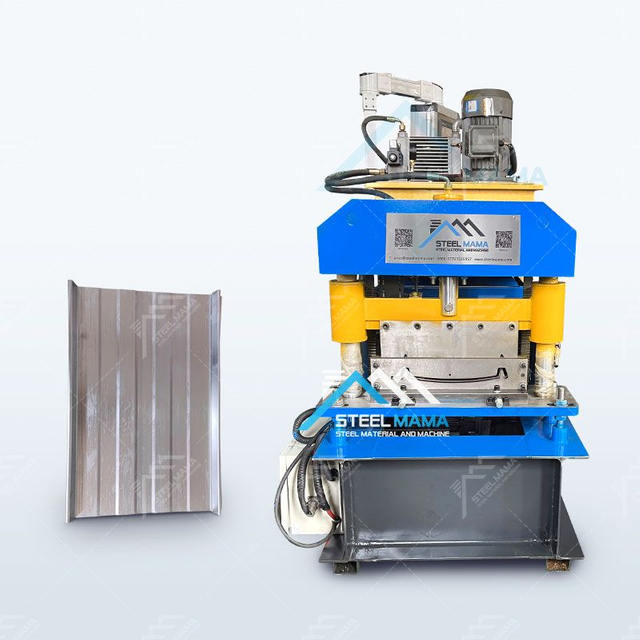
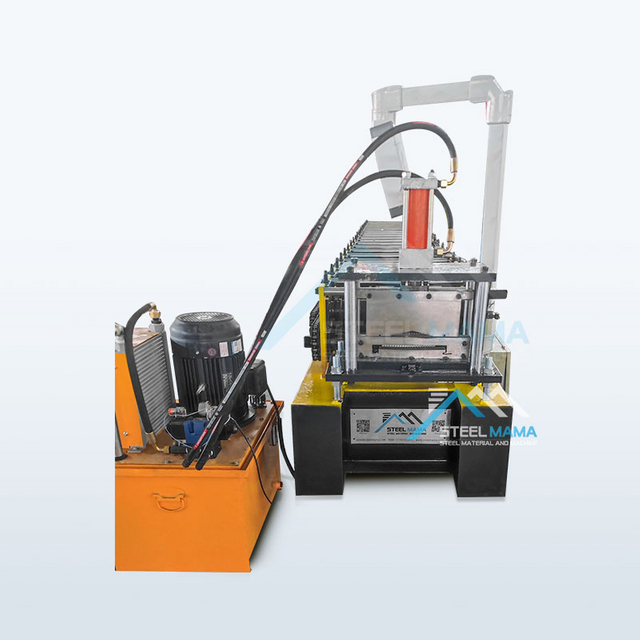
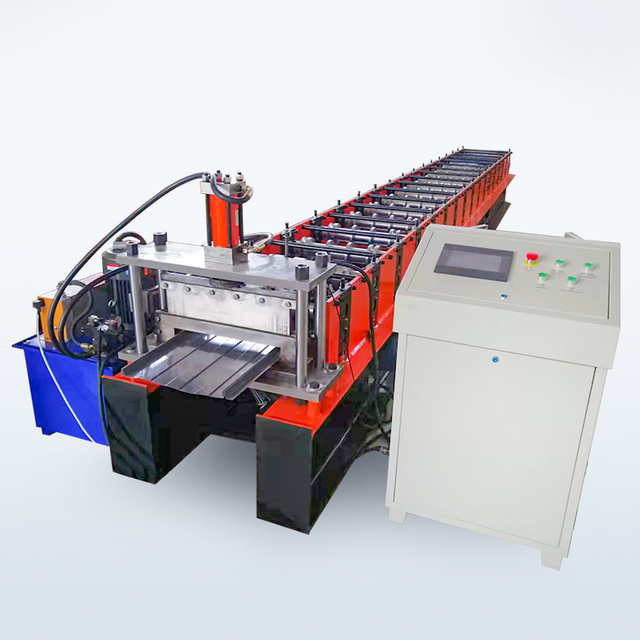
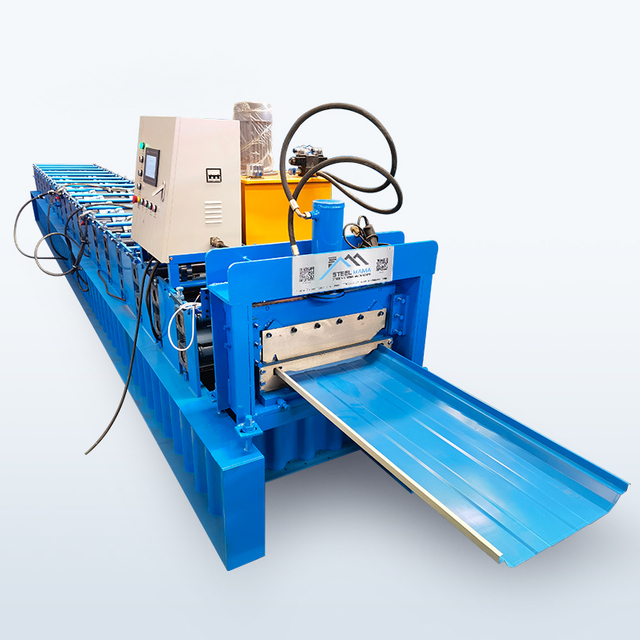
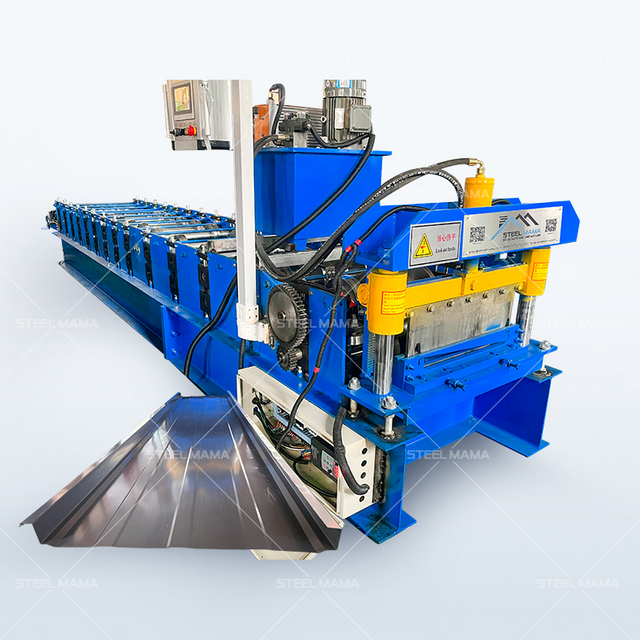
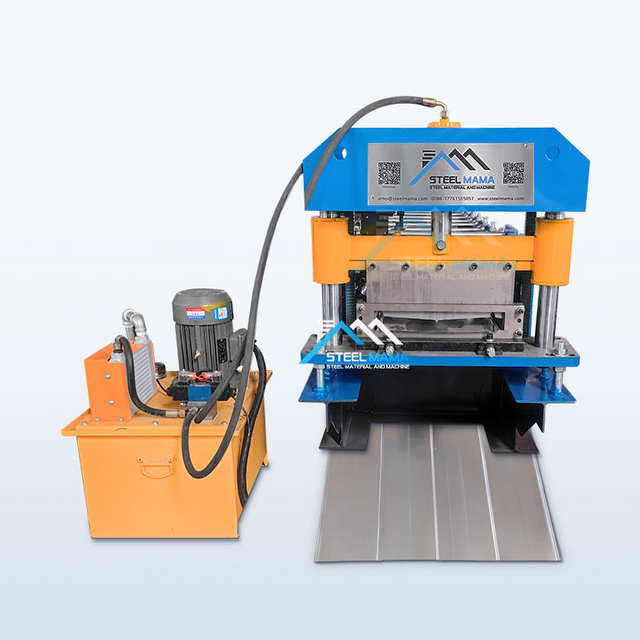
Self-locking panel machines are professional roll-forming equipment designed for the automated production of metal self-locking panels and wall panels. The finished panels feature a unique self-locking splicing structure, which enables tool-free assembly, tight fitting, excellent waterproof and dustproof performance, and extremely high construction efficiency. Compared with traditional manual processing and old-fashioned panel making machines, modern self-locking panel machines feature full automation, high precision, low energy consumption, stable operation and strong adaptability. These core advantages perfectly fit the actual construction environment, cost budgets and technical conditions of the African market, making them the preferred processing equipment for local building materials factories, construction enterprises and individual entrepreneurs. This article deeply analyzes the core reasons for the widespread use of self-locking panel machines in Africa, their main application scenarios, market advantages and future development trends.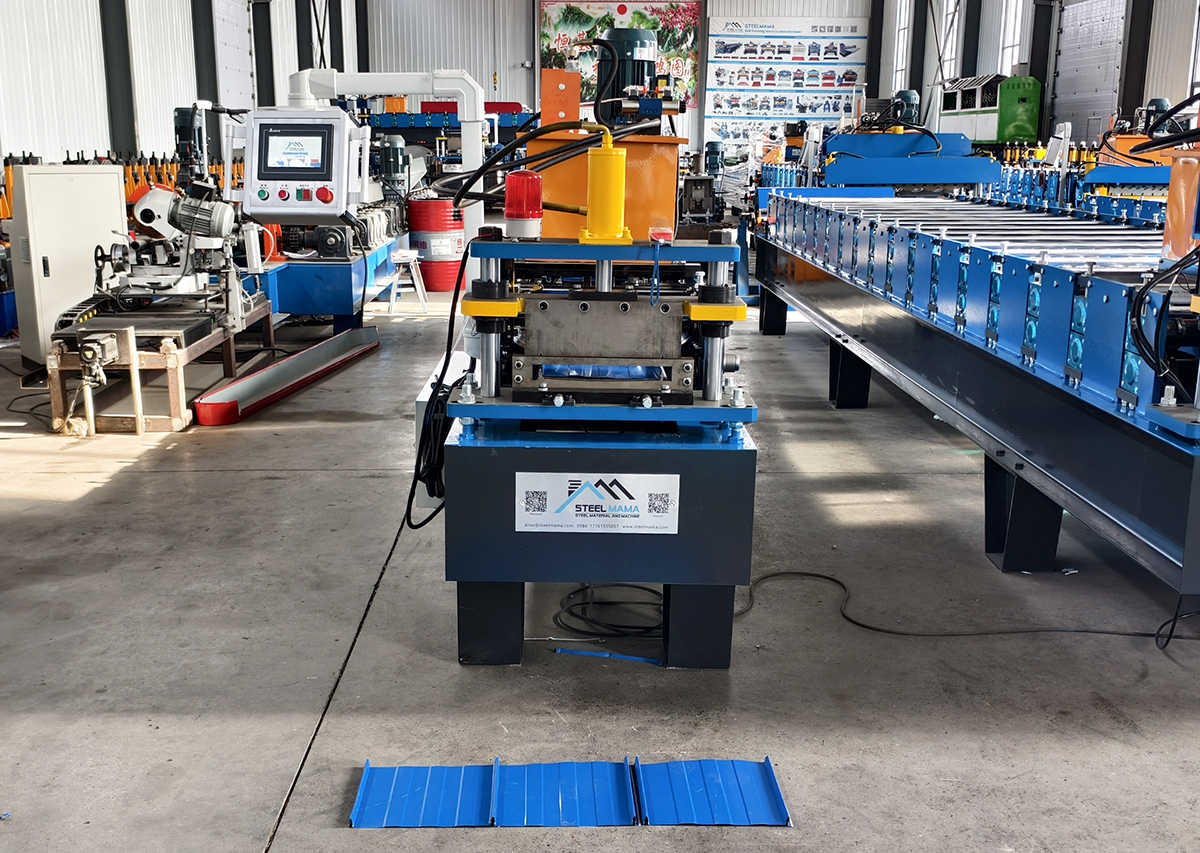
Africa is in a critical stage of urbanization and industrialization, with continuous population growth, accelerated urban expansion, and comprehensive upgrading of public infrastructure. According to industry market data, African construction investment has maintained a double-digit growth rate for many consecutive years, covering residential buildings, commercial plazas, office buildings, school hospitals, factory warehouses, transportation facilities and other fields. A large number of new construction and renovation projects generate massive and continuous demand for wall decorative panels, which directly drives the rapid popularization of supporting self-locking panel processing equipment.
Most African countries are in the middle and late stages of urban construction, and local governments have successively launched infrastructure improvement plans to solve housing shortages and backward public facility problems. In the past, African building decoration mostly adopted low-cost and short-life cement boards, wooden boards and ordinary iron sheets, which have defects such as easy corrosion, mildew, deformation and difficult maintenance, and cannot adapt to long-term use of modern buildings. The metal self-locking panels produced by self-locking panel machines have the advantages of corrosion resistance, weather resistance, fire prevention, sound insulation, easy cleaning and long service life, which just make up for the shortcomings of traditional materials. With the large-scale promotion of metal decorative panels in the African market, efficient and automated panel making machines have become indispensable core equipment for industrial production.
In addition, the rapid development of Africa’s small and medium-sized building materials processing industry has further boosted market demand. In recent years, many local Africans and foreign investors have set up small and medium-sized building materials processing factories in various regions to solve the local shortage of decorative building materials and reduce the cost of imported finished panels. These small and medium-sized factories have low investment thresholds, flexible production modes and wide market coverage, and they all take small and medium-sized automated self-locking panel machines as the core production equipment. This decentralized and large-scale small factory production model has accelerated the full coverage of self-locking panel machines in rural and remote construction markets in Africa.
The reason why self-locking panel machines can quickly occupy the African market is inseparable from their excellent adaptive performance, which can perfectly adapt to the complex climate environment, insufficient industrial supporting conditions and diverse production needs in Africa. Unlike high-precision industrial equipment that requires strict factory environment and professional operation, modern self-locking panel machines are designed with targeted optimization for the African market, featuring simple operation, stable operation, strong weather resistance and low failure rate, and are very suitable for local production and processing scenarios.
In terms of environmental adaptation, most African regions have typical tropical and subtropical climates, with high temperature all year round, strong ultraviolet radiation, and rainy and humid seasons. Ordinary processing equipment is prone to aging parts, circuit failure, rust and corrosion in this environment, resulting in frequent shutdowns and affecting production efficiency. The self-locking panel machines sold and used in Africa adopt thickened steel frame structures and anti-rust and anti-corrosion spraying technology. The whole machine can resist high temperature, ultraviolet aging and humid corrosion, and can operate stably outdoors and simple temporary factories for a long time without being affected by extreme weather. At the same time, the equipment has low requirements for production venues, does not need professional dust-free and constant-temperature workshops, and can adapt to the simple factory building conditions of most small and medium-sized processing plants in Africa, greatly reducing the factory construction cost for investors.
In terms of operation and maintenance, African building materials processing practitioners lack professional mechanical operation and maintenance experience, and complex industrial equipment is difficult to popularize locally. Self-locking panel machines adopt fully automated intelligent control systems, with integrated operation panels, one-key start and stop, and fully automatic rolling, forming, cutting and counting processes. Workers only need simple training to master the operation skills, without professional mechanical knowledge and technical background. In addition, the equipment has a modular design, with simple internal structure, universal wearing parts, convenient disassembly and maintenance, and low maintenance cost. Local maintenance workers can quickly complete daily maintenance and fault repair, avoiding production stagnation caused by equipment failure. This simple operation and easy maintenance advantage solves the technical pain points of African market equipment application.
In terms of production adaptability, the self-locking panel machine supports the processing of multiple specifications of metal sheets, covering common aluminum plates, color steel plates, galvanized steel plates and other raw materials in the African market. It can freely adjust the panel width, thickness and modeling parameters, and produce various styles of self-locking panels and wall panels to meet the decorative needs of high-end commercial buildings, ordinary residential buildings and industrial facilities. The flexible production mode enables one machine to meet multiple market demands, greatly improving the utilization rate of equipment and the comprehensive income of investors.
Cost performance and investment return are the core factors that African entrepreneurs and processing factories consider when purchasing production equipment. Self-locking panel machines have outstanding cost advantages in terms of equipment procurement cost, production energy consumption, labor cost and later operating cost, bringing stable and high economic returns for local investors, which is an important reason for their rapid popularity in Africa.
In terms of procurement cost, compared with large-scale imported integrated decorative panel production lines, self-locking panel machines have low initial investment, compact equipment structure, small floor space and no need for supporting large-scale auxiliary equipment. It is very suitable for small and medium-sized investors in Africa with limited capital scale. At present, most of the self-locking panel machines circulating in the African market are optimized and produced for the grassroots market, with reasonable pricing, high configuration and complete functions, avoiding the premium of large industrial equipment. Ordinary individual entrepreneurs and small processing workshops can complete equipment procurement and put into production with low investment, with extremely low investment threshold and high market inclusiveness.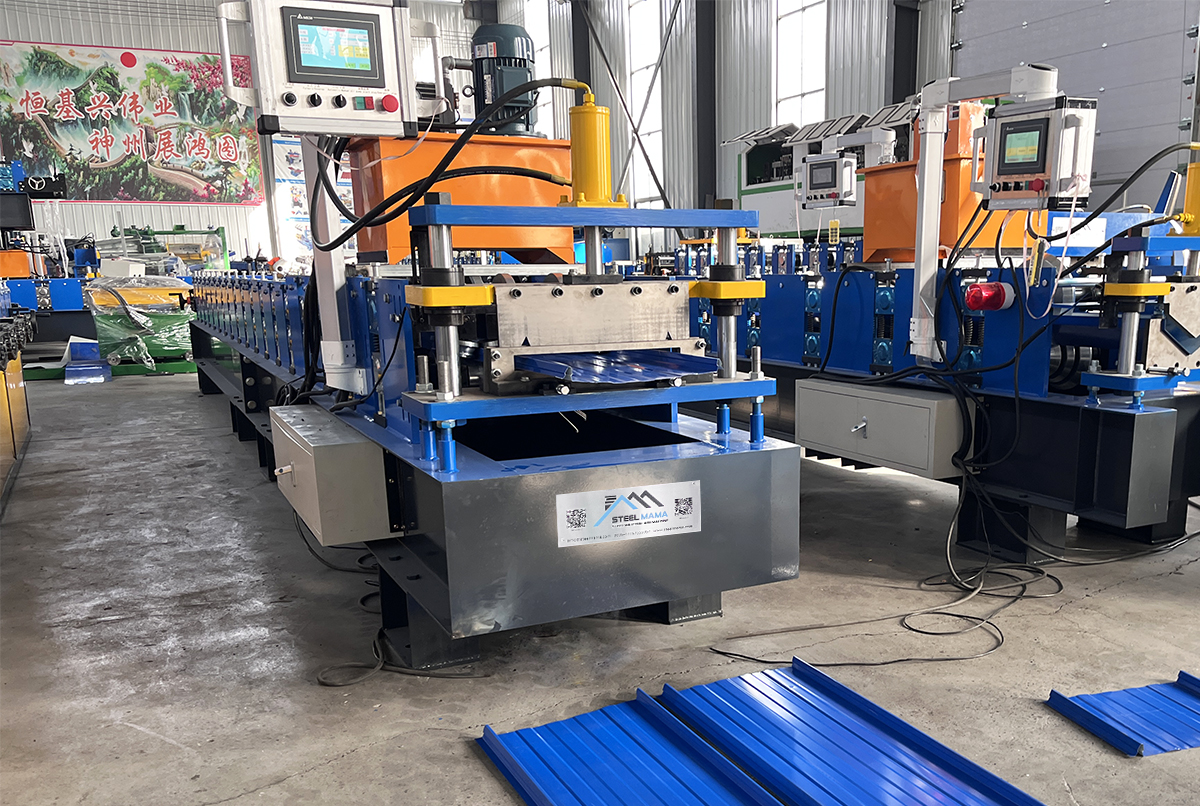
In terms of production operation cost, the fully automated production mode of self-locking panel machines greatly saves labor costs. Traditional manual panel processing requires 3-5 workers to complete rolling, cutting, shaping and finishing work, while one self-locking panel machine only needs 1-2 workers to complete feeding and finished product collection work, which reduces labor input by more than 60%. For the African market with rising labor costs year by year, the equipment effectively controls the production cost of enterprises and improves profit margins. At the same time, the equipment is designed with energy-saving motors and optimized transmission structures, with low power consumption per hour. Long-term mass production can save a lot of electricity costs for processing plants, further improving economic benefits.
In terms of service life and maintenance cost, the whole machine of self-locking panel machine is made of high-strength thickened steel, with strong compression resistance and impact resistance, stable mechanical performance and long service life, and can work continuously for a long time in high-intensity production scenarios. The wearing parts of the equipment are common standard parts in the market, with low price and easy purchase. The later maintenance and replacement cost is far lower than that of imported high-end equipment. In addition, the finished self-locking panels produced by the machine have high yield and few defective products, which avoids the material waste caused by processing errors and further reduces the production loss of enterprises. The long service life, low maintenance cost and low loss production mode enable investors to recover costs quickly and obtain long-term stable profits.
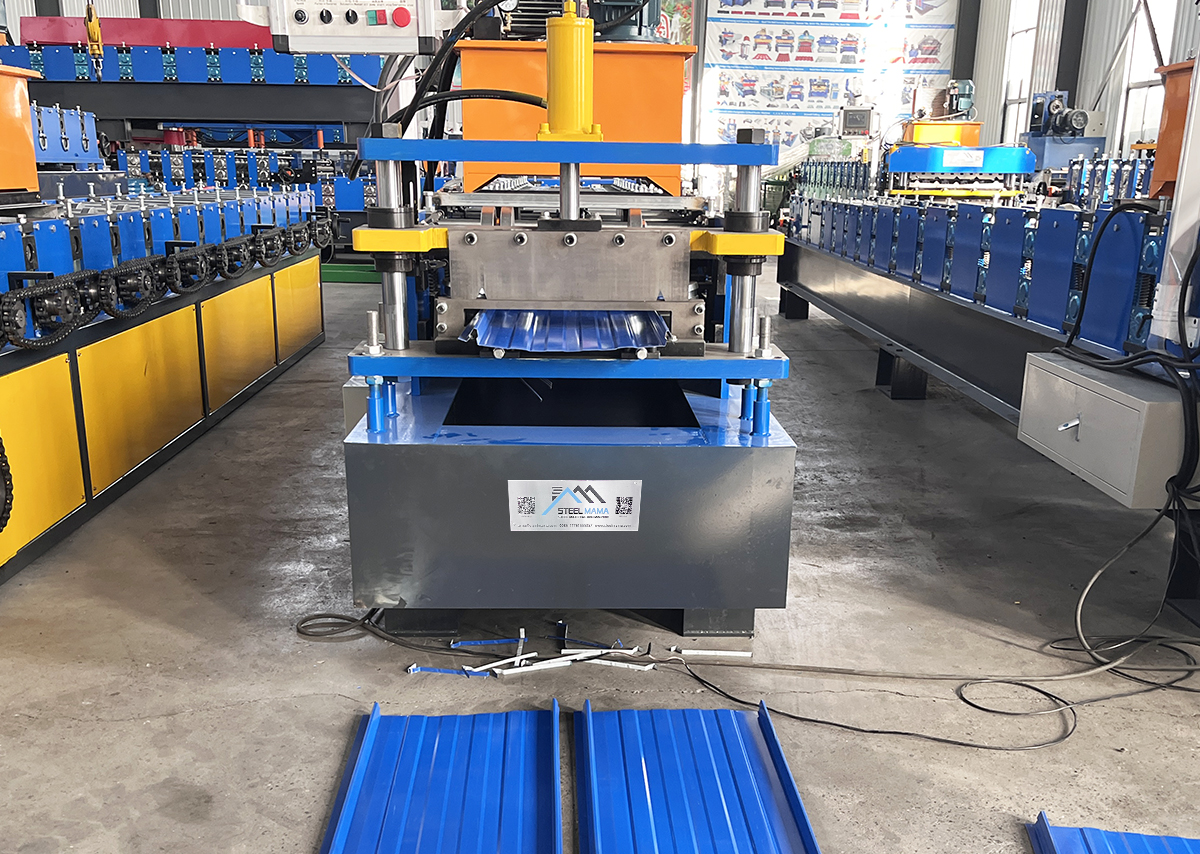
Self-locking panels produced by self-locking panel machines have diverse functions and excellent decorative effects, covering almost all mainstream building decoration scenarios in Africa. The wide application of finished panels in various construction fields in turn drives the continuous growth of market demand for processing equipment, forming a benign industrial cycle and realizing full penetration in the African market.
In residential building decoration, self-locking panels are the most popular interior decoration materials in African family houses, apartment buildings and residential communities. The panels have light weight, simple and elegant appearance, diverse color options, and fast installation speed. They can complete wall decoration in a short time, shortening the residential decoration cycle. At the same time, the panels are waterproof, moisture-proof and mildew-proof, which can effectively solve the problem of wall mildew and peeling caused by humid climate in Africa. The self-locking splicing structure is tight and firm, not easy to fall off and deform, ensuring the long-term beautiful and stable use of residential buildings. With the continuous improvement of African residents' living standards, the demand for high-quality residential decoration is increasing day by day, and the market demand for supporting self-locking panel machines is also rising steadily.
In commercial and public building projects, self-locking panels are widely used in shopping malls, supermarkets, office buildings, hotels, schools, hospitals and public activity centers. Commercial and public buildings have high requirements for building aesthetics, fire resistance, sound insulation and durability. The metal self-locking panels produced by professional equipment have uniform and flat surfaces, strong three-dimensional sense, excellent fire resistance and sound insulation performance, which can create a comfortable and safe indoor environment. In addition, the panels are easy to clean and maintain, suitable for high-frequency use of public buildings, and can keep the building interior beautiful for a long time. A large number of commercial and public construction projects in Africa drive the continuous mass production demand of decorative panels, making self-locking panel machines the standard equipment for local building materials processing enterprises.
In industrial construction fields such as factories, warehouses and storage yards, self-locking and wall panels are favored for their high strength, wind resistance, corrosion resistance and low maintenance. African industrial plants are mostly large-span buildings, which require decorative and protective materials with strong structural stability and weather resistance. The self-locking panels produced by the machine have tight overall splicing, good wind and pressure resistance, and can resist strong wind, rainwater erosion and high-temperature sun exposure. They are suitable for long-term use in harsh industrial environments. At the same time, the low-cost and fast-installation features of the panels can effectively reduce the construction cost and cycle of industrial buildings, which is very in line with the cost control needs of African industrial construction. The rapid development of African industrial construction has further expanded the market application space of self-locking panel machines.